

SJP HISTORY
Artwork by Monica Szlekovics
After the DVSJA was passed, it was clear that a vast network of lawyers, advocates, social workers, researchers, and organizers would need to mobilize to assure that the survivors most in need would be able to access the law’s relief.
A great, progressive law means nothing without organizing, documentation, public education and social movements.
The Survivors Justice Project began when Kate Mogulescu of Brooklyn Law School, working closely with Jaya Vasandani and Tamar Kraft-Stolar from the Women & Justice Project, contacted Michelle Fine and Maria Elena Torre at The Public Science Project at the Graduate Center, and Dana-Ain Davis of Gender/Women Studies, also at the Graduate Center at CUNY. Together, they began to imagine and map an interdisciplinary project to track the DVSJA as it took hold in New York.
Starting with a list of women in NYS prison at the time the DVSJA went into effect who, based on charge and sentence, might be eligible to seek resentencing under the new law, SJP formed. This list included 487 women.

With a starter grant from the New York Women's Foundation, and an army of law and social science/gender studies students, SJP first gathered on March 9, 2020.
From there, the team collected publicly available information about each of the 487 women: information from legal/court documents and media that included details of the crime, region, and, in some cases, clear references to domestic violence.
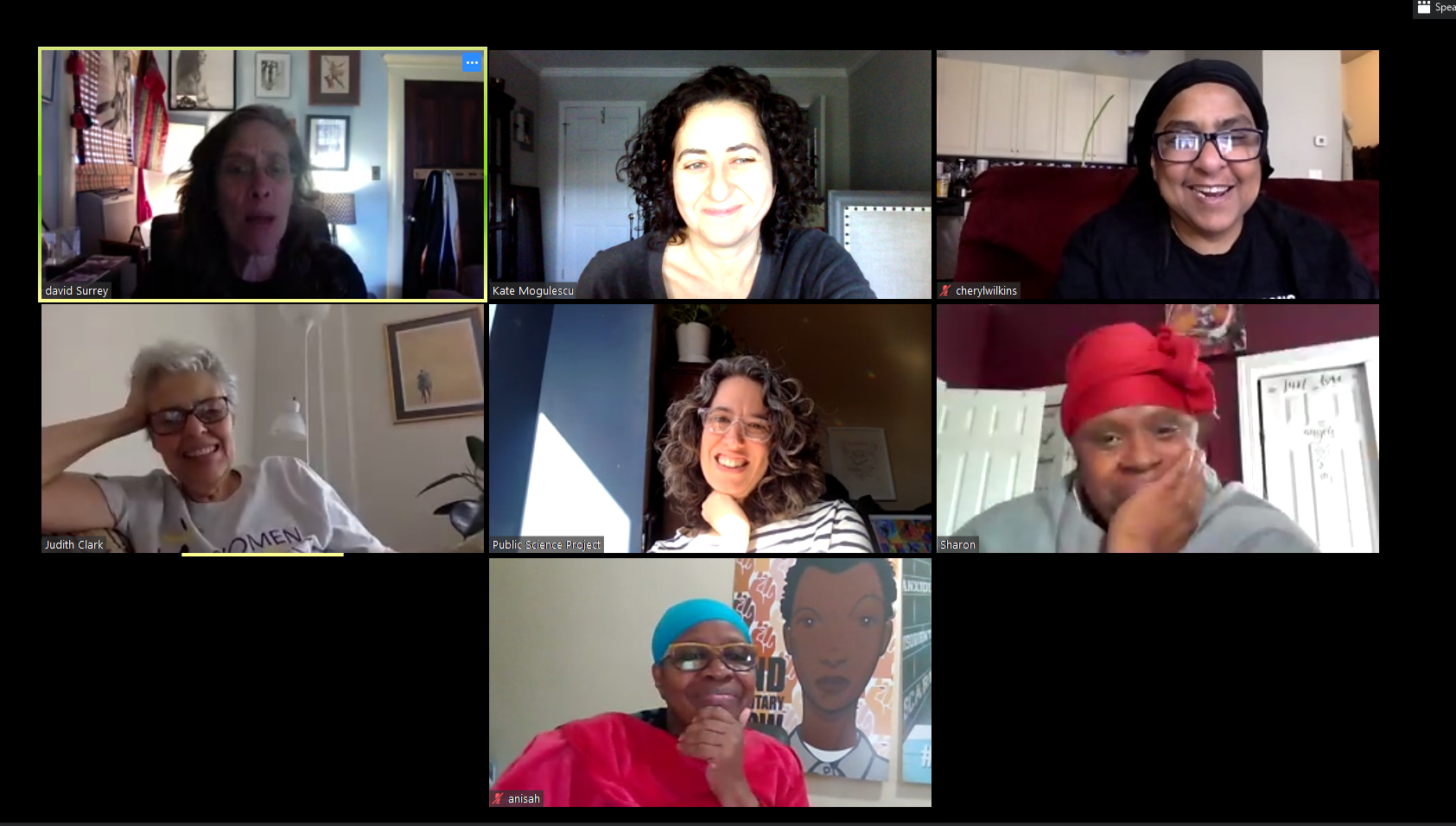
Rooted in participatory ethics, Kate, Michelle, and Maria invited a strong, paid advisory group of women, leading advocates who have survived incarceration, to ground the framework, methods, analysis and the organizing that would evolve.
“I am a woman who is actively trying to stop perpetuating the cycle of violence in her life. I am more than a number, the consequences of my disempowerment. I have a history, I have a voice and I am not unlike you.”
— Monica Szlekovics
This dynamic group represented a range of partner organizations including The Center for Justice at Columbia University, Hour Children, Women’s Community Justice Association/Beyond Rosies, and the Coalition for Women Prisoners. This intentional bringing together of women with different biographies, skills, movement histories and relationships to the criminal legal system is central to the vibrancy, trust, and deep solidarities that constitute SJP.

Since March of 2020, SJP has been analyzing emergent cases and practice, and carving open powerful and sometimes delicate conversations about race and gender in resentencing; concerns about who is eligible and who falls outside the law; the deep and painful continuities of domestic violence and state violence; how region and class affect decisions and likelihood of resentencing; and how race and racism affect the kinds of evidence women may have access to.
SJP collaborates with people facing prosecution and people in prison trying to utilize the DVSJA, trains judges and defense attorneys, collects data, connects with advocates in other states interested in DVSJA replication, builds a robust network of partners, and envisions what is needed for continued DVSJA implementation. More than anything, SJP imagines what it would look like to have a DVSJA everywhere, for all survivors, or ultimately to not need a DVSJA at all.
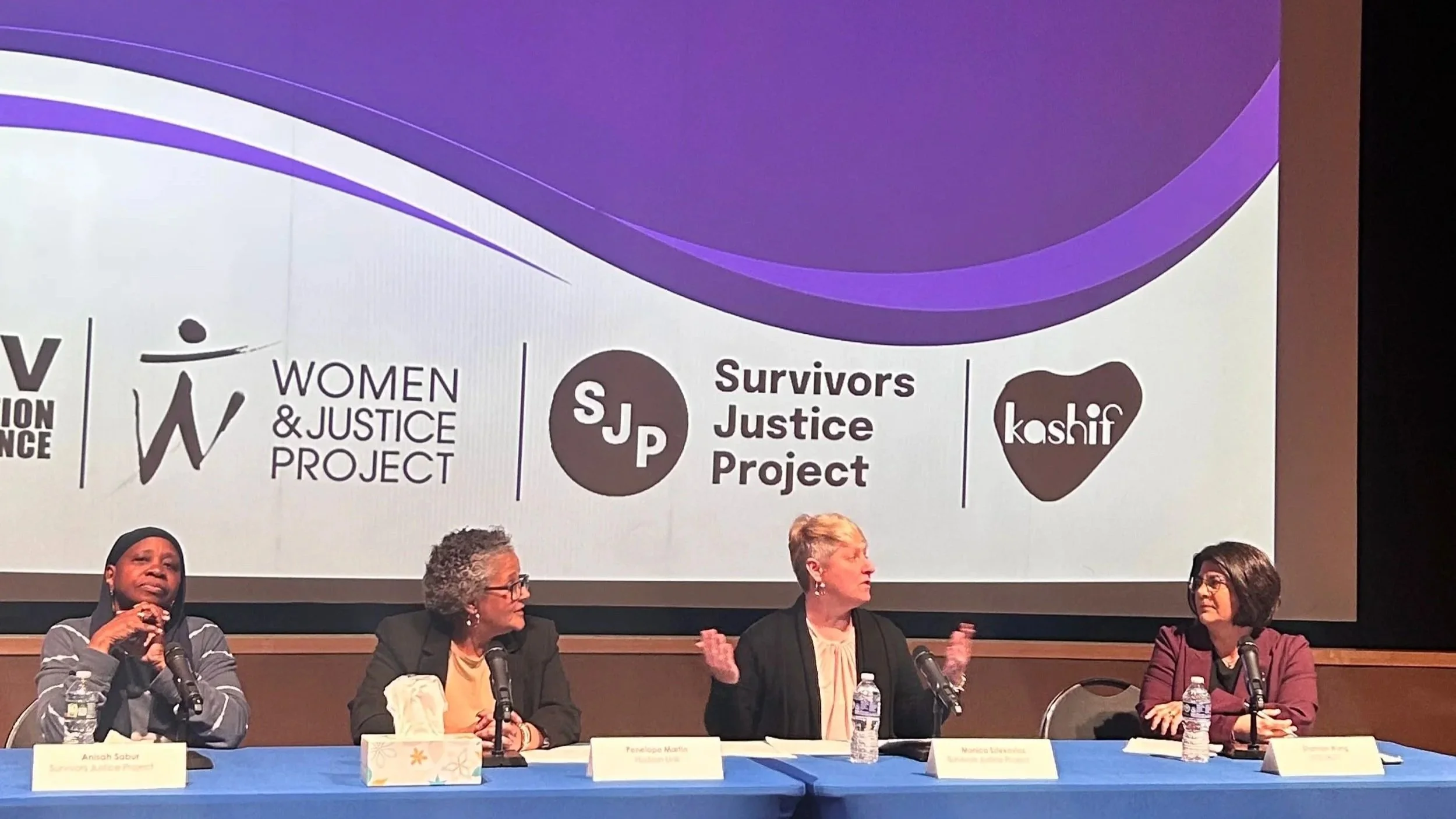
Beyond Survival Film Screening & Panel Discussion, Albany NY.
May 6, 2025

Presentation for Connecticut advocates.
May 13, 2021